
GENERAL DENTISTRY
Cleaning
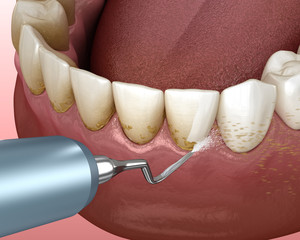
Dental cleaning is the process by which the dental plague and dental tartar is removed.
It is considered to be the most important method of prevention in the dental practice since the systematic visits to the dentist can prevent and combat the development of gingivitis and periodontitis.
Teeth Cleaning Process
The cleaning is performed by using an ultrasound device. The ultrasound device breaks the dental tartar and removes the dental plaque that accumulates on the teeth and gums. The teeth surfaces are then polished with special pastes and brushes while at the same time any pigments that might exist on the surfaces are removed.
Does cleaning hurt?
Cleaning is a simple and painless procedure. The patient rarely feels any pain during cleaning, but when the procedure is uncomfortable to the patient, an anesthetic gel may be applied or even a small dose of anesthetic may be administered locally.
Duration of Cleaning
The duration of cleaning depends on the amount of dental tartar and dental plaque that exists in the patient’s mouth. In addition, the coloring of the teeth plays a decisive role in the duration for the completion of a cleaning process.
Frequency of cleaning
For cleaning, a visit to your dentist is recommended every six months. In some cases, visits may occur more frequently if it is deemed necessary by your dentist.

Dental Fillings
A dental filling is one of the most common dental procedures. A tooth needs filling when it is affected by caries. The caries begins as a tiny hole in the surface of the tooth that grows with time and goes in deeper into the layers of the tooth. This is why it is necessary for the tooth to be filled in time before the caries contaminates the pulp (nerve) of the tooth or else a root canal treatment would possibly be required.
Process
After the caries is removed from the tooth, the missing tooth piece is then replaced with a filling (composite resin). The seal is smoothed, polished and fitted to not hinder the mouth when closing.
Composite resin is the white filling. It’s a polymeric material that is bonded to the tooth, highly aesthetic since it does not stand out from the natural tooth.
Extraction
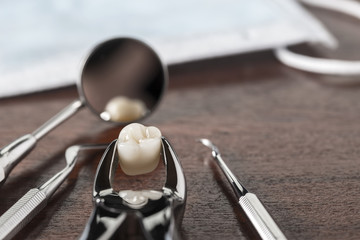
Extraction is the removal of the tooth from the dental barrier. It is the cure of last resort where there is no other way to maintain a tooth in the mouth (e.g. filling, root canal treatment).
The extraction is performed after local anesthesia is administered and thus it is painless for the patient.
The degree of difficulty in extracting a tooth depends on the tooth’s location and the extent of its damage.
In addition to the necessary tooth extractions, healthy teeth may also need to be extracted in some occasions for reasons of an orthodontic treatment or where there exist neonatal (child) teeth that have remained in the dental barrier which prevent the normal birth of permanent teeth and thus need to be removed.
Endodontic Treatment
An endodontic treatment is also known by the patients as a root canal treatment.
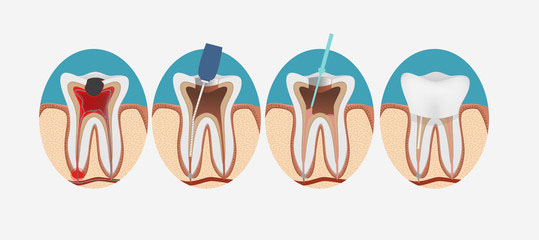
The endodontic treatment is performed on the inside of the tooth and it aims to remove the infected or dead pulp (nerve). The causes of the infection or the necrosis of the pulp may derive from profound caries damages, large and deep fillings, tooth injury or fracture with pulp (nerve) apocalypse.
Process of Endodontic Treatment
The endodontic treatment is carried out with special micro-tools on the inside of the tooth once any caries damage that might exist has been removed. All the root canals of the tooth are then treated appropriately, both mechanically and chemically, with various antiseptic fluids. Finally, all root canals are sealed with a material called gutta-percha and a special paste to avoid re-contamination of the tooth.
The length of work inside the root canals is determined by a special apex locator as well as by a radiography the result is ensured.
After the completion of the treatment, the method of restoration of the tooth is decided (filling, axial reconstitution, coronary).
Does endodotic treatment hurt?
Local anesthesia is always done so that the treatment becomes painless.
Symptoms leading to endodontic treatment
- Acute reflex pain
- Edema
- Fistula
- Pain in chewing
- Extreme sensitivity to hot and cold stimuli
- Dyschromia or discoloration of the tooth
How many visits are required for the completion of the treatment?
In living pulp (nerve) teeth, the endodontic treatment can be completed in one risk-free visit.
If the nerve in the tooth is dead, then it is recommended that the treatment is completed on a second visit, so that the medication stays longer in the root of the tooth to achieve maximum antisepsis.
What will happen if an endodontic treatment is not done?
If an endodontic treatment in a tooth with infected or necrotic pulp (nerve) is not performed, the inflammation on the bone below the tooth will extend to the soft tissues (cheek, neck) causing more pain. In addition, germs can pass through the bloodstream to other organs, creating more risks for the patient, and especially to people with serious health issues.